
The incident unfolded on the evening of March 17, 2026, during a live broadcast of The Rachel Maddow Show on MSNBC. Earlier that day, the White House had released an official commendation recognizing Alexandra Eala’s extraordinary achievements as a symbol of inspiration for Filipino-Americans and immigrant communities across the United States. The statement highlighted her journey from Quezon City courts to upsetting top-10 players, reaching the round of 16 at Indian Wells 2026, and climbing to a career-high ranking inside the Top 30—all while embodying resilience, humility, and national pride.
It concluded: “Alexandra Eala represents the best of what talent and determination can achieve. She makes the Philippines—and America—proud.”
Rachel Maddow opened her segment with a critique of what she called “performative patriotism” and “selective celebration of foreign athletes.” She argued that the White House statement was politically motivated and questioned why U.S. officials would spotlight an athlete from another nation. Then came the line that changed everything:
“She’s just a tennis player from a country that doesn’t even register on the world map and doesn’t deserve my respect.”
The studio lights seemed to dim for a moment as the words hung in the air. Within seconds, the clip was ripped from the broadcast and shared across X, TikTok, Instagram Reels, and Facebook. The backlash was instantaneous and ferocious. Filipino-Americans, who number over 4 million in the United States, felt personally attacked. Tennis fans worldwide—many of whom had followed Eala’s rise from junior Grand Slam titles to WTA breakthroughs—called the comment ignorant, racist, and disrespectful. Hashtags exploded: #StandWithAlexEala, #RachelMaddowDisrespect, #PhilippinesOnTheMap, #RespectEala, #FilipinoPride.
Posts pointing out basic facts—110 million people, a sovereign nation with a rich history, a growing global cultural influence—received millions of engagements.

The tennis community responded swiftly. Coco Gauff tweeted: “Talent doesn’t need a passport. Respect does.” Iga Świątek posted a photo of Eala celebrating a recent win with the caption: “This is what heart looks like.” Rafael Nadal wrote: “Maps don’t measure greatness. Courts do. Respect to Alex.” Even non-tennis figures—Filipino celebrities, politicians, and everyday citizens—joined the chorus, turning the moment into a national point of pride.
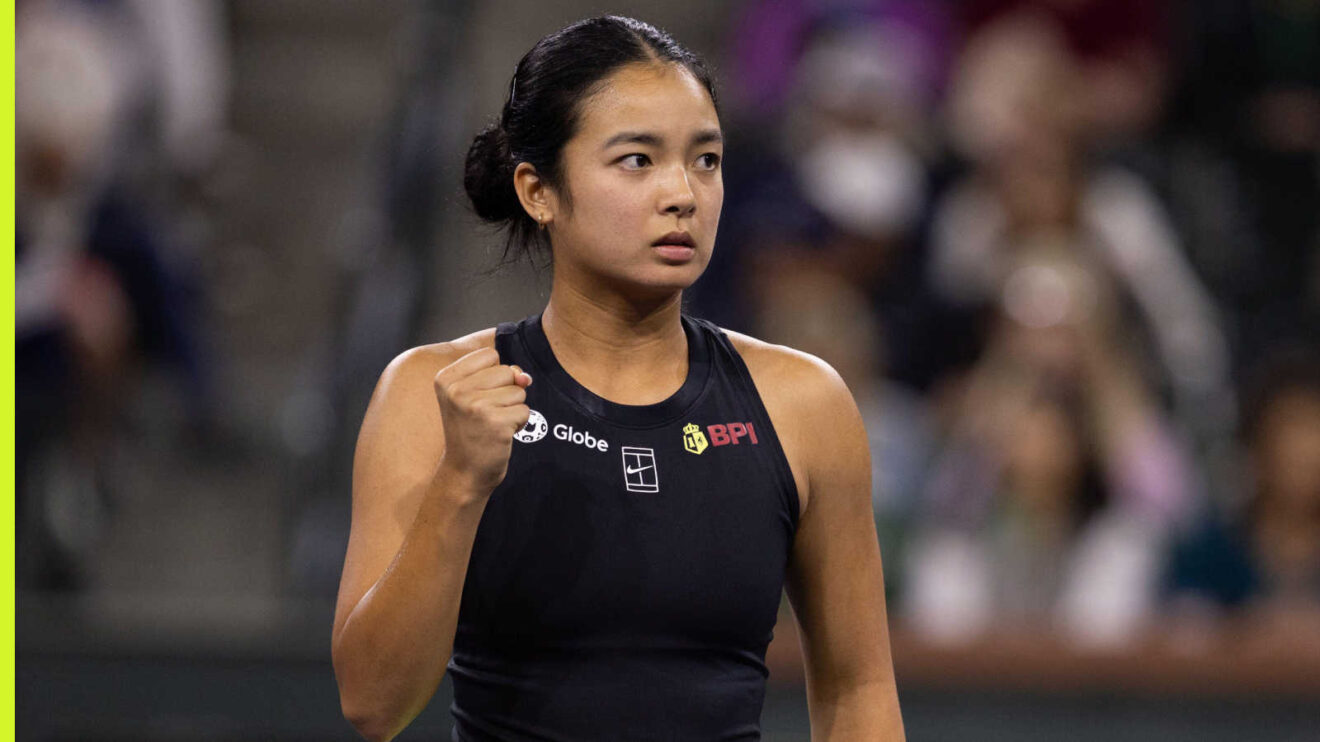
Then, just eight minutes after Maddow’s remark aired, Alexandra Eala—currently in Miami preparing for her next tournament—posted a single tweet from her verified account:
“Your map may be small, but my heart and my fight are bigger than your words will ever reach.”
Twelve words. No anger. No name-calling. No emojis. Just quiet, unshakeable dignity.
The internet erupted. Retweets climbed past 500,000 in the first hour. Replies flooded in: “That’s how queens respond.” “She didn’t lower herself—she lifted the entire conversation.” “12 words > 12 minutes of hate.” The tweet became a viral manifesto of grace under fire. Merchandise featuring the exact phrase sold out within hours. Fans turned it into banners, profile pictures, and even temporary tattoos at tennis events.
Back on MSNBC, the reaction was immediate and visible. During a live follow-up segment, Maddow was shown the tweet on air. She paused mid-sentence, her voice faltered, and she appeared to wipe tears from her eyes. The broadcast cut abruptly to commercial. When it resumed, Maddow offered a brief, halting apology: “I spoke carelessly and without full context. I regret any pain caused by my words. That was not my intention.” But the damage was irreversible—and Eala’s response had already become the defining moment of the night.
In the Philippines, the story dominated headlines for days. National television channels replayed the clip alongside Eala’s tweet, framing it as a masterclass in composure. President Ferdinand Marcos Jr. issued a statement: “Alexandra Eala has once again shown the world the strength and grace of the Filipino spirit. We stand with her.” Celebrities, athletes, and ordinary citizens shared personal stories of how Eala’s success had inspired them to dream bigger.
On court, Eala let her tennis speak. In her Miami opener, she played with visible fire, winning in straight sets and dedicating the victory “to everyone who chooses kindness over cruelty.” The crowd gave her a standing ovation that lasted nearly two minutes.
Rachel Maddow’s careless sentence became a textbook example of how thoughtless words can backfire in a hyper-connected world. Alexandra Eala’s twelve-word reply became proof that true power lies not in volume or venom, but in precision, heart, and unshakeable dignity.
In an era where outrage often dominates headlines, Eala reminded millions that grace under pressure remains the most devastating—and beautiful—response of all.
In the Philippines, the story dominated headlines for days. National television channels replayed the clip alongside Eala’s tweet, framing it as a masterclass in composure. President Ferdinand Marcos Jr. issued a statement: “Alexandra Eala has once again shown the world the strength and grace of the Filipino spirit. We stand with her.” Celebrities, athletes, and ordinary citizens shared personal stories of how Eala’s success had inspired them to dream bigger.