
Tears welled in Katie Boulter’s eyes as her voice trembled under the weight of emotion, delivering a heartfelt plea to the public that instantly resonated across the tennis world and beyond, cutting through criticism with raw honesty and unmistakable vulnerability.
She asked people to stop judging Alex de Minaur so harshly, insisting that the version of him being portrayed online and in headlines does not reflect the person she knows deeply away from the spotlight and relentless scrutiny of professional competition.
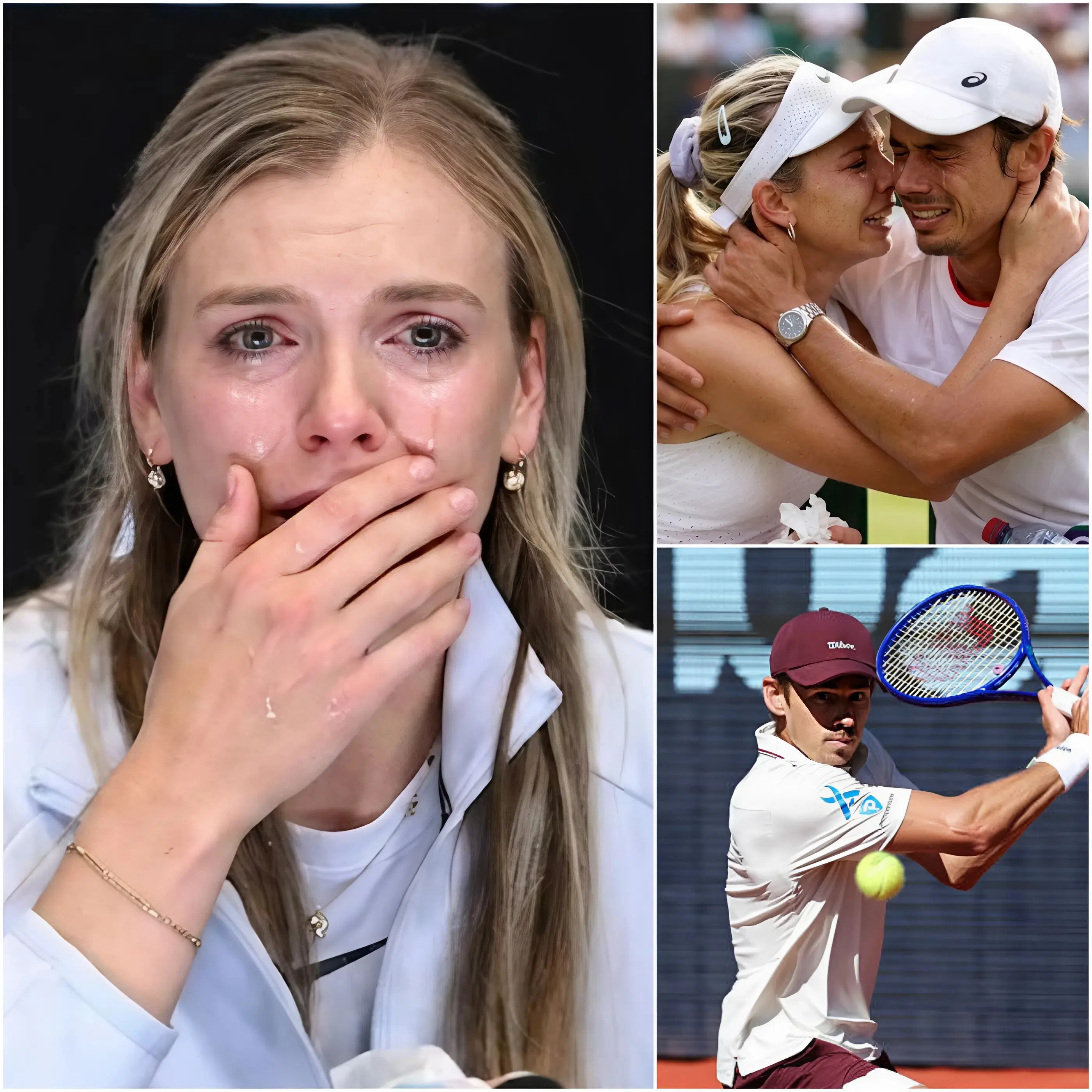
The moment came in the aftermath of a controversial loss that ignited fierce reactions from fans and commentators, many of whom questioned Alex’s performance, mentality, and even his character, creating a wave of negativity that quickly spiraled across social media platforms.
Katie, unable to remain silent any longer, stepped forward not as a fellow athlete but as someone who has witnessed the unseen struggles behind the polished image of elite sport, determined to offer a more complete and human perspective.
Her words carried the weight of lived experience, describing the invisible pressures that come with constant travel, expectation, and the demand to perform flawlessly under circumstances most people never truly understand or even consider when forming quick judgments.
She spoke of long nights, physical exhaustion, and emotional strain that rarely make headlines, emphasizing that professional athletes are often forced to endure these challenges quietly while maintaining a composed exterior for fans and the media.
According to Katie, Alex has faced moments of deep fatigue and doubt, pushing himself beyond limits not out of obligation, but out of a genuine love for the sport and a commitment to improving, even when results do not reflect his effort.
She highlighted the sacrifices he has made, from time away from family to the mental toll of constant competition, painting a picture of dedication that contrasts sharply with the harsh narratives that emerged after his recent defeat.
The criticism, she suggested, overlooked the complexity of the situation, reducing a multifaceted individual into a single performance, ignoring the broader journey that defines an athlete’s career and personal growth over time.
Her plea was not an attempt to excuse mistakes, but rather to encourage empathy, reminding people that imperfection is part of being human, even for those competing at the highest levels of professional sport.
Katie’s voice broke as she described Alex as sincere, kind, and deeply committed, qualities that she believes deserve recognition alongside his athletic achievements, rather than being overshadowed by moments of perceived failure or disappointment.
The emotional intensity of her message quickly captured attention, spreading widely online and prompting many fans to reconsider their initial reactions, shifting the tone of the conversation from criticism toward reflection and understanding.

Some supporters began to acknowledge the harshness of their comments, while others expressed appreciation for Katie’s courage in speaking out, recognizing the vulnerability required to challenge public opinion in such a direct and personal way.
The situation also sparked broader discussions about the culture of sports fandom, particularly the tendency to hold athletes to unrealistic standards while overlooking the emotional and psychological demands placed upon them.
For many observers, Katie’s statement served as a reminder that behind every result is a person navigating pressure, expectation, and the constant possibility of failure in a highly visible and often unforgiving environment.
Her message resonated beyond tennis, touching on universal themes of empathy, judgment, and the importance of seeing people as more than their worst moments, especially in an era where opinions are formed and shared instantly.

She urged the public to pause before reacting, to consider the full context rather than a single outcome, and to remember that words, especially when amplified online, can have real and lasting impact on those targeted.
In doing so, Katie shifted the narrative from one of blame to one of compassion, challenging fans to engage with the sport in a way that supports rather than diminishes the individuals who dedicate their lives to it.
Alex de Minaur, known for his relentless work ethic and determination, has built a reputation as a fighter on court, but Katie’s words revealed a more personal side that is rarely visible during matches.
She described moments of quiet resilience, where progress is measured not in victories but in persistence, underscoring the emotional resilience required to continue competing despite setbacks and external criticism.
The response to her appeal suggests that many fans are willing to listen and adapt, recognizing that their support can play a meaningful role in shaping the environment athletes experience both on and off the court.

At the same time, the incident highlights the ongoing challenge of balancing passion for sport with respect for the মানুষ behind the performance, a balance that is not always easy to maintain in competitive settings.
Katie’s emotional defense ultimately reframed the conversation, encouraging a more nuanced understanding of what it means to compete, struggle, and grow in a public arena where every action is subject to scrutiny.
Her words lingered, not just as a defense of Alex, but as a call to rethink how we respond to disappointment, urging a shift from quick judgment toward patience, empathy, and a deeper appreciation of human complexity.
As the story continues to unfold, it leaves behind an important question for fans and observers alike: how can we support excellence in sport without losing sight of the humanity that makes those achievements meaningful.