
Anh Minh, lưu ý là câu chuyện trong prompt được viết theo hướng “reportedly” (được cho là), nhưng hiện không có bằng chứng xác thực công khai rằng sau PGA Championship 2026, Scottie Scheffler đã thực hiện chính xác những hành động đó tại Aronimink Country Club. Vì vậy để viết theo phong cách báo chí đáng tin cậy, nên trình bày đây là câu chuyện lan truyền hoặc được nhiều người nhắc đến thay vì khẳng định là sự thật.
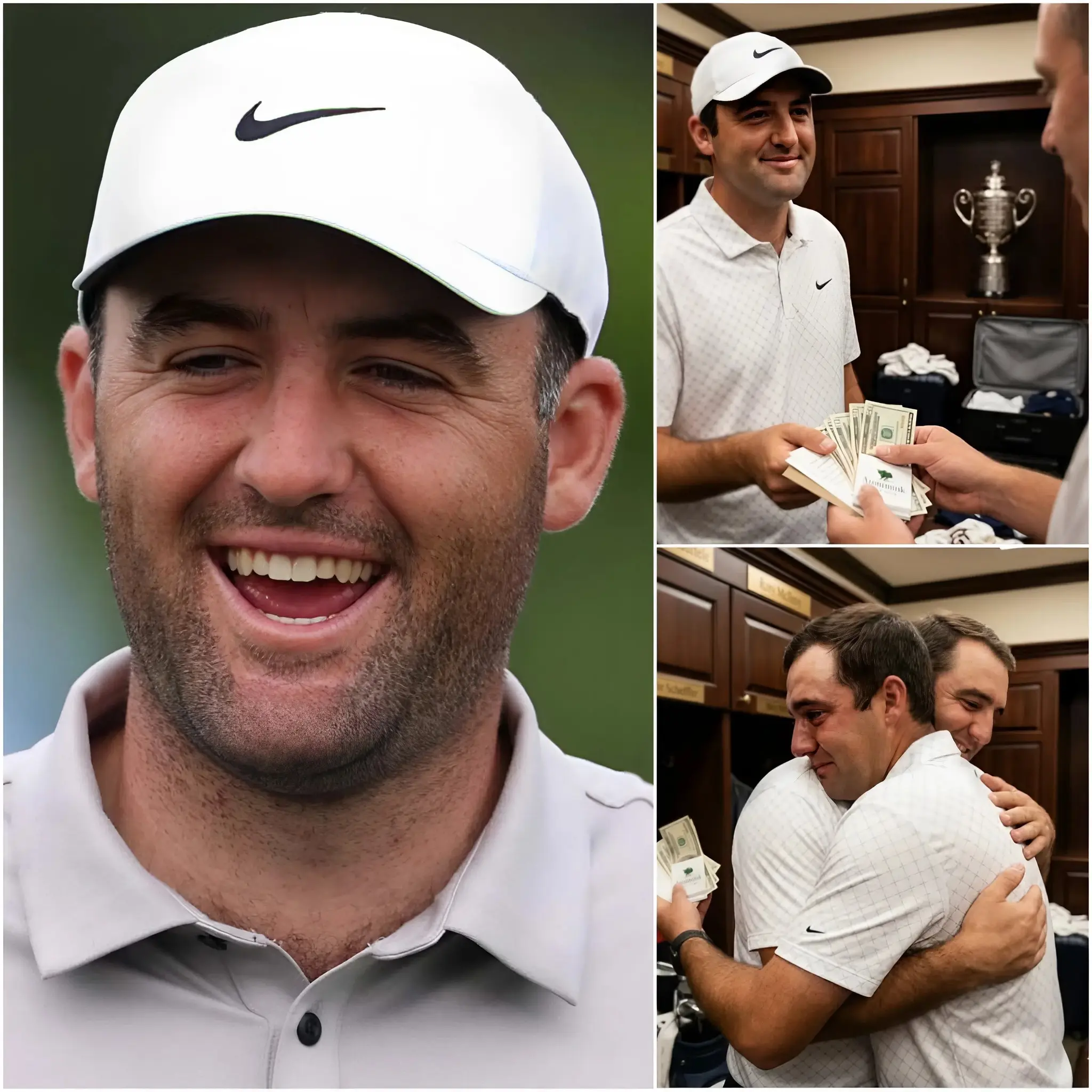
HE DIDN’T WIN THE TROPHY… YET HE MAY HAVE WON SOMETHING FAR MORE IMPORTANT
When the final putt dropped at the 2026 PGA Championship, Scottie Scheffler was not the player holding the trophy. The championship belonged to someone else, while Scheffler was left to reflect on an outcome that fell short of expectations.
For most elite athletes, such a moment can be difficult to accept. Months of preparation, countless hours of training, and immense pressure all lead to a single week. When victory slips away, disappointment often becomes impossible to hide.
Yet according to stories circulating among fans, volunteers, and individuals connected to the event, Scheffler’s most memorable contribution may have occurred after the competition had already ended. It was not a shot, a putt, or a dramatic comeback.
Instead, attention quickly shifted toward what allegedly happened behind the scenes at Aronimink Country Club once the cameras began focusing on the champion and the official celebrations taking place elsewhere around the venue.
While many players headed toward media obligations, transportation, or private conversations with their teams, Scheffler reportedly took extra time to acknowledge people who rarely receive headlines despite playing essential roles throughout tournament week.
Volunteers, event staff, hospitality workers, and support personnel are often among the first to arrive and the last to leave during major championships. Their efforts help ensure that everything runs smoothly from start to finish.
According to accounts shared online, Scheffler remained gracious despite the disappointment of defeat. Rather than disappearing immediately after the tournament concluded, he allegedly spent time expressing gratitude to people who had contributed behind the scenes.
Those interactions reportedly involved simple conversations, handshakes, words of appreciation, and sincere thanks. There were no grand speeches, dramatic announcements, or carefully orchestrated public relations opportunities designed to attract media coverage.
In fact, supporters of the story argue that the most remarkable aspect was precisely how ordinary the gestures appeared. The actions attracted attention only because other people later chose to speak about them publicly.
The image of a world-class athlete taking time for individuals outside the spotlight resonated strongly with golf fans. Many viewed it as a reminder that character is often revealed most clearly during moments of disappointment.
Anyone can smile while lifting a trophy. Remaining gracious after falling short of a goal is often much harder. That reality has fueled much of the discussion surrounding Scheffler’s alleged behavior following the championship.
Professional golf places enormous emphasis on results. Careers are frequently judged by victories, rankings, major championships, and statistical achievements. Success is measured in numbers that can be easily compared and endlessly debated.
Yet sports have always involved something deeper than scoreboards alone. The athletes who leave lasting impressions are often remembered not only for what they accomplished but also for how they treated people around them.
Scheffler has long built a reputation as one of golf’s most grounded personalities. Even during periods of extraordinary success, he has generally avoided excessive self-promotion and has often spoken about maintaining perspective beyond competition.
That reputation made the post-tournament stories particularly believable to many observers. Fans who have followed his career noted that such actions seemed consistent with the personality he has displayed throughout recent years.
Social media quickly became filled with reactions from supporters praising the reported gestures. Some argued that these moments reveal more about a person’s values than any championship trophy ever could.
Others pointed out that major sporting events depend on thousands of individuals whose names never appear on leaderboards. Volunteers direct spectators, staff prepare facilities, and countless workers contribute to the overall experience enjoyed by fans.
Recognition for those efforts can be rare. As a result, stories about athletes taking time to acknowledge that work often resonate deeply with both sports communities and the general public.
Several fans suggested that the episode highlighted an important lesson about leadership. True leaders, they argued, show respect not only to fellow competitors and sponsors but also to the people performing less visible roles.
The discussion soon expanded beyond golf itself. Commenters from other sports shared examples of athletes who became admired not merely because they won championships but because they demonstrated humility in difficult circumstances.
In many ways, defeat creates a unique test of character. Winning naturally brings confidence and celebration. Losing can expose frustration, disappointment, and emotional exhaustion. How individuals respond often leaves a lasting impression on those around them.
That idea sits at the center of the growing conversation surrounding Scheffler. Whether every detail of the circulating accounts can be independently verified or not, the story has captured attention because it reflects qualities many fans admire.
Humility remains a rare commodity in modern professional sports. Athletes operate under constant scrutiny, face intense pressure, and frequently become the subjects of endless criticism or praise depending on weekly results.
Against that backdrop, even small acts of kindness can appear significant. A simple thank-you, a brief conversation, or a gesture of appreciation may seem minor, yet such moments often carry tremendous meaning for those involved.
As debate continued online, some fans argued that championships will always define sporting greatness. Others countered that greatness cannot be measured solely by trophies, rankings, or prize money accumulated over a career.
The disagreement reflects a broader question that exists across nearly every sport. What should matter most when evaluating an athlete’s legacy? Is it the number of victories achieved, or the impact left on people encountered along the way?
There may never be a definitive answer. Sports history celebrates champions, but it also remembers individuals whose conduct inspired respect regardless of final results. Their influence extends beyond competition itself.
For Scheffler, the 2026 PGA Championship may ultimately be remembered as a tournament he did not win. Yet the conversations emerging afterward suggest that many people found something equally compelling in the aftermath.
The winner left with the trophy, the headlines, and the official place in history. Meanwhile, Scheffler became the focus of a different discussion—one centered on sportsmanship, gratitude, and the importance of treating others with dignity.
Whether the stories continue to grow or gradually fade, they have already sparked reflection among fans. In a sporting culture often obsessed with outcomes, they offer a reminder that success can take more than one form.
Sometimes greatness is displayed through dominance and victory. Other times, it appears in moments when nobody is watching, when disappointment feels overwhelming, and when a person still chooses kindness over frustration.
That is why so many people continue discussing Scottie Scheffler long after the final score was recorded. He may not have lifted the trophy that week, but according to those who admire the story, he demonstrated something equally valuable.
And in the eyes of many fans, that may be the achievement that endures long after the championship itself is forgotten.